Bougatsa: Greece's Sweet and Savory Pastry
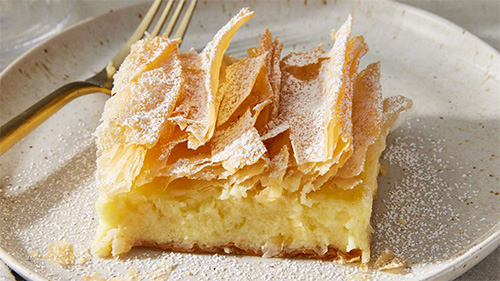
Originating from the Byzantine period, bougatsa has evolved into a versatile treat enjoyed across Greece, especially in the northern regions of Thessaloniki and Serres. Whether filled with creamy semolina custard or tangy feta cheese, this flaky phyllo pastry offers a delightful blend of textures and flavors.
A Brief History
Having roots in ancient Roman times, bougatsa bears resemblance to the Roman "pānis focācius," or hearth bread. In Greece, bougatsa has become a staple breakfast item, often enjoyed with a cup of coffee or tea. The pastry's popularity has led to the establishment of specialty shops known as "bougatsadika," where it is sold fresh daily.
Sweet Bougatsa: A Creamy Delight
The sweet variety of bougatsa, called "bougatsa krema," has a creamy semolina custard filling. The custard, which is made with eggs, milk, sugar, and fine semolina, has a silky texture that goes well with the crispy buttered phyllo dough layers. After baking, the pastry is dusted with powdered sugar and cinnamon, creating a delightful contrast of flavors.
In regions like Veria, the custard is particularly sweet and creamy, while in Thessaloniki, it is slightly less sweet and has a crunchier texture. In Athens, the bougatsa is known for its rich and creamy filling, making it a favorite among locals and visitors alike.
Savory Bougatsa: A Cheesy Twist
For those who prefer savory pastries, bougatsa offers a delectable option filled with cheese. The most common cheese used is feta, known for its crumbly texture and tangy flavor. Mizithra cheese, a soft cheese derived from goat and sheep milk, is used to make a variety known as "bougatsa Chaniotiki" in Crete. In order to balance the sweet and salty flavors, this variant is frequently dusted with sugar and cinnamon.
Other savory fillings include spinach, minced meat, or a combination of spinach and feta, offering a hearty alternative to the sweet version.
How It’s Made
1. Crafting the Custard Filling
● Whisking the Base: Begin by combining semolina flour, sugar, and eggs (or just semolina and sugar, depending on the recipe). Whisk thoroughly to blend the ingredients.
● Introducing Warm Milk: Heat milk (often with vanilla or a touch of orange zest) until hot—but not boiling. Slowly pour a bit into the egg mixture while whisking to temper the eggs.
● Thickening the Custard: To make the custard thicker, put the tempered mixture back in the saucepan. Stir continuously over medium heat until the mixture thickens to pudding-like consistency.
● Finishing Touches: Lastly, whisk in cold butter and any flavor enhancers like vanilla or orange zest after removing from the heat. To stop a skin from developing, cover with plastic wrap that is pushed onto the surface.
2. Phyllo Preparation & Assembly
● Layering the Base: Butter the baking pan liberally. Lay down several sheets of phyllo (typically 6–12), brushing each one with melted butter for rich flavor and crisp texture.
● Handling Phyllo with Care: Phyllo dries quickly and tears easily. Keep unused sheets covered with a damp towel to prevent drying, and handle gently.
● Encasing the Custard: Spoon the cooled custard onto the layered phyllo base. Fold and cover with additional phyllo sheets, again brushing each with butter. Trim the edges neatly and roll inward if desired.
● Scoring and Buttering: Optionally score the top to guide even slicing after baking, then brush with a final layer of butter.
3. Baking to Perfection
● Oven Time: Bake at around 175–200 °C (350–400 °F) for 20–45 minutes, depending on your recipe and oven—until the phyllo turns golden and crisp.
● Serving Right Away: Once done, let the bougatsa rest briefly before slicing. While still warm, dust with powdered sugar and a sprinkle of cinnamon for that classic sweet finish.